Neo-Futurism 2025
Stage Manager
Project Lead: Corin Friese
Loyola University Chicago | The Underground Theatre
About The Chicago Neo-Futurists
Neo-Futurism is a theatrical philosophy grounded in radical honesty, immediacy, and the rejection of illusion. Rather than playing characters or pretending to inhabit fictional worlds, performers present themselves exactly as they are—sharing personal stories, real emotions, and truthful actions in the moment. The format of thirty rapid-fire plays performed in sixty minutes, with the audience determining the order, reflects Neo-Futurism’s commitment to spontaneity, responsiveness, and the belief that theater should mirror the constantly shifting nature of real life.
About The Loyola Neo-Futurist Project
For the second year in a row, the Chicago Neo-Futurists lead a workshop where students worked as an ensemble to write, direct, design, and star in a Neo-Futurist performance of their very own with 30 plays in one hour!

Run Sheet


Building a run sheet for this show was unlike any I’d created before. Because the plays were performed in a randomized order, the run sheet needed to be extremely easy to read and contain only the information essential for running the show smoothly. When an ensemble member called out the name and number of a play, I would quickly scan the sheet to find that number and set the lighting while they prepared the stage. By the time they said “go,” I was fully ready from a tech standpoint to begin the play. After each piece ended, I would cross its number out with a sharpie to help my eyes find the remaining plays more quickly as the show went on.
Neo-Futurism 2025 was my first experience programming on both a light board and in QLab, and I’m grateful for the opportunity to broaden my skills and diversify my experience. Gaining a deeper understanding of what goes into designing and programming is incredibly valuable to me as someone exploring a career in stage management, and in theatre more broadly. After this hands-on independent work, I feel much more equipped for future opportunities that require feeling comfortable operating or doing basic programing.
When programming QLab, I organized my workspace by play number, grouping all cues for each piece together. Ensemble members sent me the sound files or music they wanted, and I incorporated them directly into QLab, encouraging ensemble members to find technical elements that could best support the story of each play.
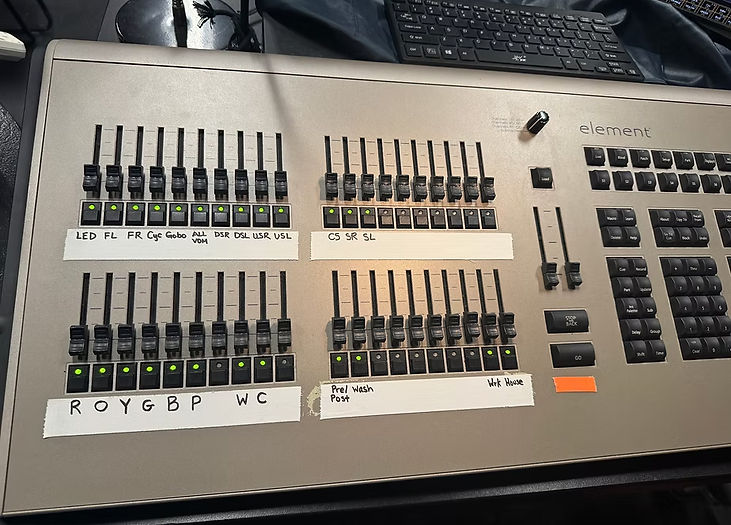
For the light board, I knew early on that the most efficient way to run the show would be to program most cues onto sub-faders, creating a flexible “toolbox” of lighting looks that the ensemble could mix and match to create their desired look. I programmed each LED color, warm and cool washes, house and work lights, individual aisles, and various stage sections as separate faders, and more, giving performers maximum freedom to shape the visual world of their plays. There were only two plays which required a cue because they involved some sort of effect, like flashing party lights. In the running of the show, I utilized the "Go To Cue" button on the light board to easily type in the cue number and hit it at the correct time during the play while simultaneously hitting Go on a sound cue.



Reflection
Through Stage Managing Neo-Futurism, I discovered that I am a much stronger and more grounded leader when I’m not fixated on anticipating every unknown. I’ve always had an instinct to be overly prepared, wanting every answer in advance and to eliminate as many variables as possible. While working on this show didn’t magically erase that tendency, it did help me recognize how much more effectively I lead when I loosen my grip on that pressure. Allowing myself to step into moments of uncertainty, rather than trying to eliminate them, became one of the most empowering parts of the process. That realization alone feels like a major shift in how I approach both leadership and stage management.I was also genuinely surprised by how much joy I found in watching the show take shape. What I expected to be a high-stress, high-anxiety experience instead became something energizing. I enjoyed the pressure in a way I didn’t anticipate and it sharpened my focus rather than overwhelming me. Running the show was fun, fast, and creatively engaging, and it reminded me why I love this work in the first place.
Before this project, I felt a significant gap in my experience when it came to technical skills, especially programming cues and operating lights and sound. That lack of confidence often made me hesitant about certain opportunities, both as a theatre artist and specifically as a stage manager. Now, after navigating those systems myself, I feel far more empowered. I’ve learned that I can approach unfamiliar technical tasks with curiosity, persistence, and a willingness to figure things out through experimentation and online resources. That independence (the ability to teach myself and problem-solve without waiting for someone to walk me through every step) feels like one of the most valuable skills I gained from the process.
I know that skill will continue to grow throughout my career, but it already makes me feel more prepared to take on professional work outside an academic environment. Instead of seeing unknowns as gaps, I’m starting to see them as opportunities to expand my toolkit. That shift in mindset, combined with the confidence I built throughout Neo-Futurism, will shape the way I approach future productions, leadership roles, and the evolving technical demands of contemporary theatre.